Local testing in Katalon True Platform
This document shows you how to use Katalon Tunnel in Katalon True Platform to run tests against apps that are hosted in a private network, behind a firewall, or on a local environment.
You can use Katalon Tunnel with:
- Automated test runs in Katalon True Platform.
- Playwright test suites run from a connected repository. See Run against a private or internal application.
- Run with AI for manual test runs executed by Katalon AI Assistant.
Before running tests through Katalon Tunnel, make sure you have:
- A configured Katalon Tunnel. See Configure Katalon Tunnel.
- An active tunnel client running on a machine that can access your application under test (AUT).
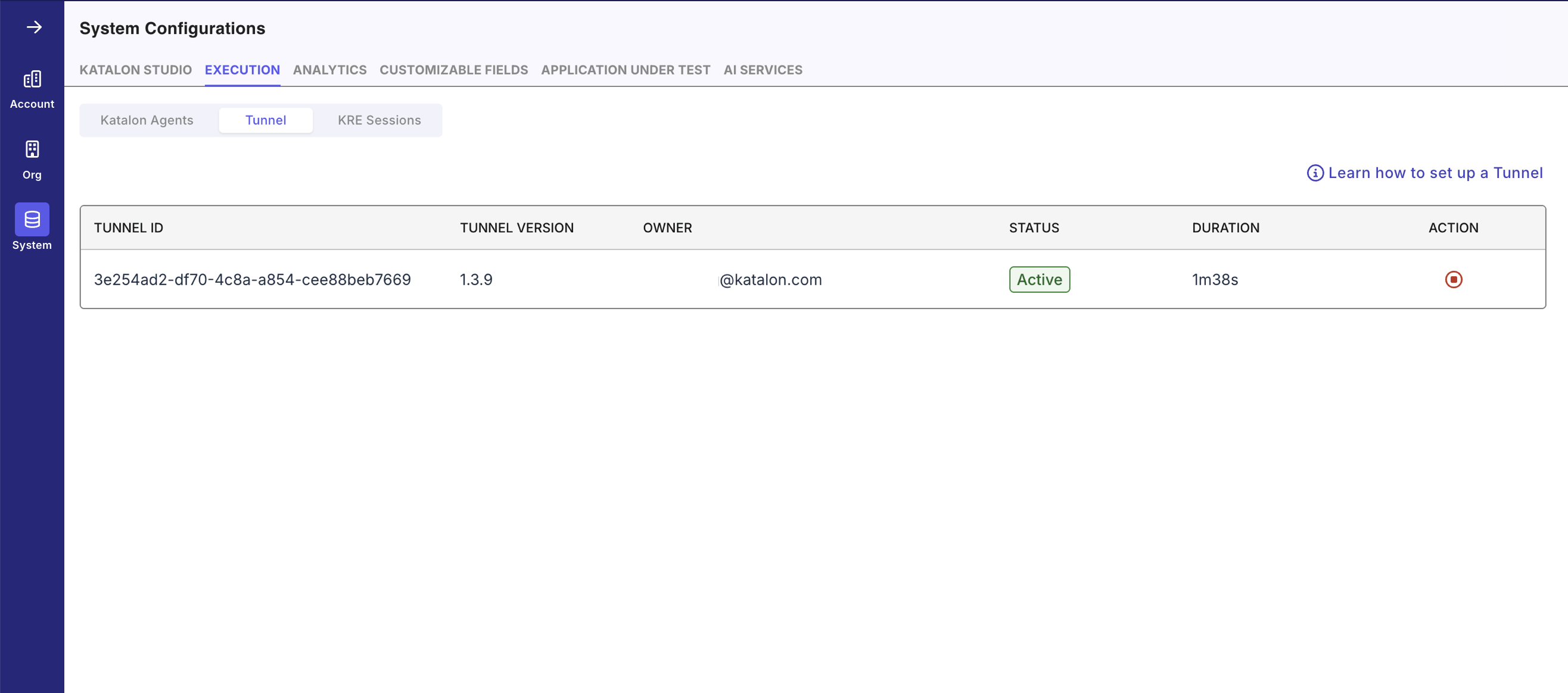
To confirm the tunnel is ready, go to Account Settings > System > Configurations > Tunnel and verify that the tunnel status is Active.
Run automated tests with Katalon Tunnel
-
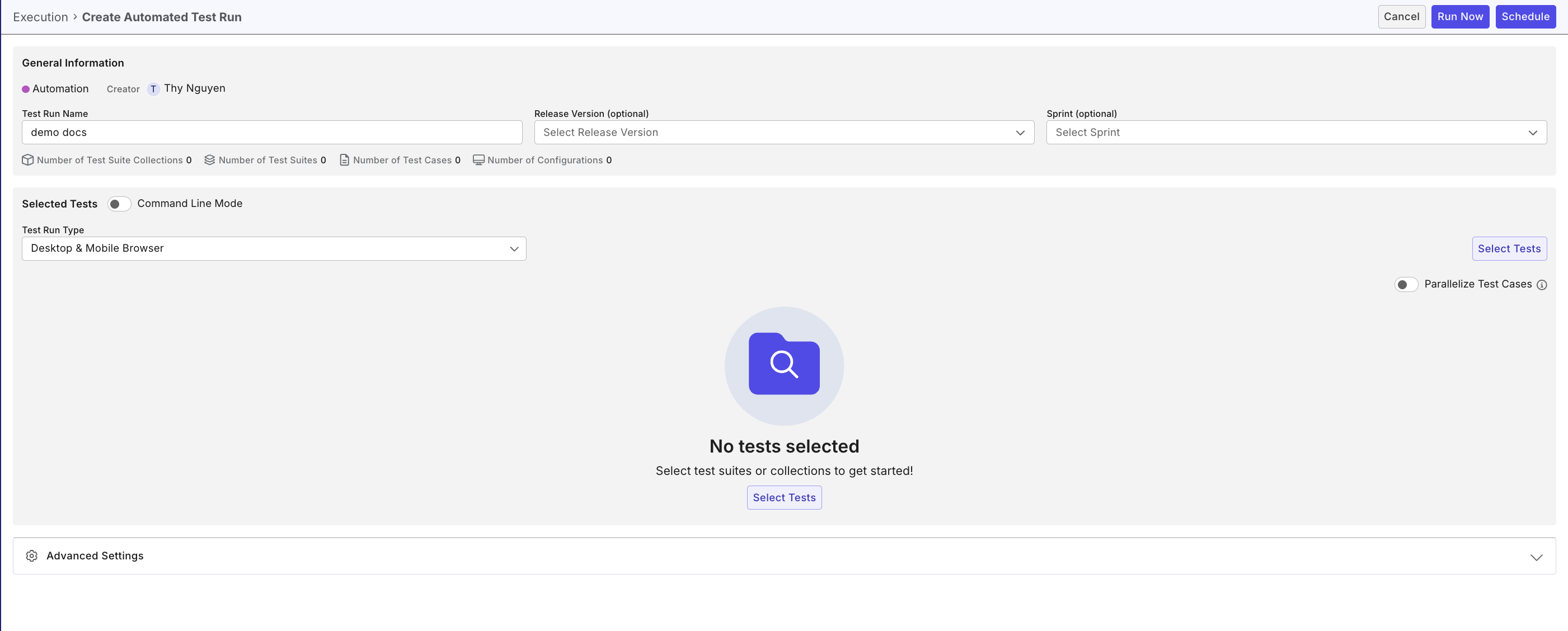
Navigate to Executions and select + Create > Create Automated Test Run.
-
Specify the test run information and configuration. For detailed instructions, see Create automated test run.
-
In the Advanced Settings section, switch the Private/Local Testing toggle on.
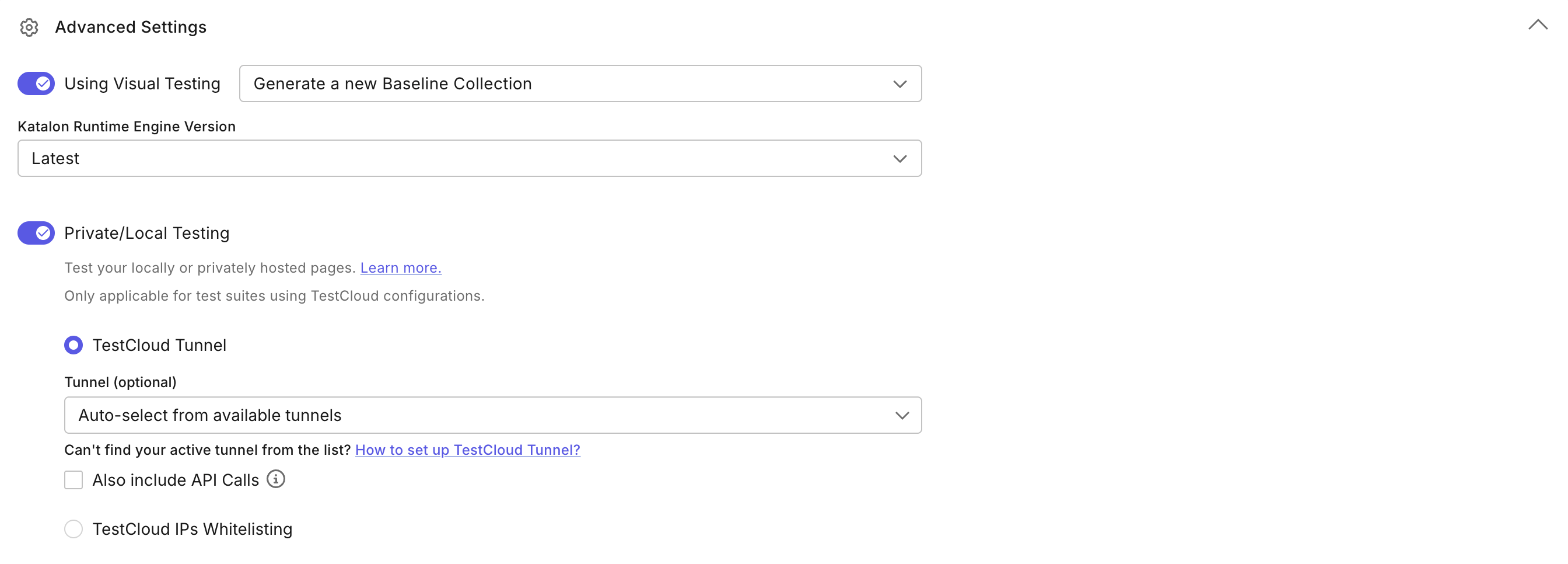
- Test Execution - Cloud Tunnel: You can choose a specific tunnel to execute the test or use Auto-selected tunnel. With the auto-select option, Test Execution - Cloud will use the most available tunnel, prioritizing private tunnels over shared tunnels. In case your tests also perform API calls, check the Also Include API Calls option.
- Test Execution - Cloud IPs Whitelisting: Enable this option to whitelist Test Execution - Cloud's infrastructure IP addresses and endpoints, allowing Test Execution - Cloud to securely access your application under test when it is hosted within a restricted or highly secure network. See the detailed list of required IPs and endpoints in Network configuration for Test Execution - Cloud.
-
Select Run Now to execute instantly or Schedule to create a recurring schedule.
Run tests with AI via Katalon Tunnel
Use this workflow when you want Katalon AI Assistant to execute tests via cloud tunnel against an AUT that is behind a firewall.
- For restricted network setup, you need to whitelist required outbound destinations. See Tunnel with Firewall.
When you select a tunnel for Run with AI, the AI runner opens the AUT from the cloud execution environment and routes the private-network traffic through the selected tunnel. This lets Katalon AI Assistant interact with internal web applications without having to expose the AUT to the public internet.
- Navigate to Executions and select + Create > Create Manual Test Run.
- Complete the test run setup by following Create a manual test run, then select Create Test Run.
- On the manual test run details page, select Run with AI.
- In the Run with AI dialog, enable Private/Local Testing.
- Select Tunnel. Under Tunnel (optional), leave Auto-select from available tunnels selected or choose a named tunnel with an Active status.
- Review the run configuration and select Start AI Execution.
- During execution, respond to any follow-up questions from AI if it needs more information to complete a step.
- When the execution finishes, review the test result, screenshots, video, and AI log.
- Select End Test Run after you confirm the result.
Keep the tunnel client running until the AI execution finishes. If the tunnel stops while the run is in progress, Katalon AI Assistant may lose access to the private AUT and the affected steps can fail.
- Include the full private AUT URL in the first relevant test step.
- Make sure the machine running the tunnel client can open the AUT directly.
- If your AUT requires VPN access, start the VPN before starting the tunnel client.
- Use a specific tunnel when different applications are available from different private networks.
- Use
allow_hostsin thetunnelconfigfile to route only the required AUT domains through the tunnel. See Configure the tunnelconfig file.